Every fish caught is the result of a technique working in harmony with the environment, the species, and the moment. Whether you're dropping a jig to the bottom of a cold clear river or sight-casting a fly to a rising trout, the technique you choose defines your success on the water. In this comprehensive guide, we break down every major fishing technique — covering how, when, and why each approach works — so you can make smarter decisions the next time you step to the water's edge. New to fishing? Start with our beginner-friendly techniques overview first.
Understanding Fish Behavior: The Foundation of Every Technique
Before you can select the right technique, you need to think like a fish. Fish are cold-blooded, meaning their metabolism and activity levels are directly tied to water temperature. They are opportunistic feeders that balance caloric intake against energy expenditure — which means they prefer to be where food comes to them rather than chasing meals across open water.
Fish use structure — rocks, logs, weed beds, depth changes, bridge pilings, and current seams — to ambush prey. Understanding this is the single most impactful insight you can develop as an angler. When you approach any body of water, your first question should never be "what lure should I use?" but rather "where are the fish right now, and what are they eating?" Understanding how to read water to find fish is the single skill that pays dividends across every technique in this guide.
- Thermoclines: In lakes, fish stratify based on temperature. In summer, the thermocline (the transition zone between warm surface water and cold deep water) acts like a ceiling and a floor — many species suspend just above the thermocline where oxygen and food are most plentiful.
- Feeding windows: Fish are most active during low-light conditions — early morning, late evening, and overcast days. During bright midday sun, most species retreat to shade or deeper water.
- Pressure responses: Rising barometric pressure generally triggers active feeding; falling pressure (before storms) produces feeding frenzies; stable low pressure after a cold front makes fish lethargic and finicky.
Reading Water Conditions Like an Expert
Water clarity, current speed, depth, oxygen levels, and structure all tell a story about where fish are hiding. Learning to read water is arguably the most valuable skill a fisherman can develop — and it applies across every technique and every environment from mountain streams to offshore reefs.
Freshwater Water Reading
In rivers, fish hold in specific locations that offer rest from the current while positioning them to intercept food. Look for eddies behind large rocks, the confluences where tributaries meet the main current, and the deep seam lines where fast and slow water meet. These transition zones are almost always productive.
In lakes, focus on points of land that extend into the water, submerged humps and channels visible on depth charts, the edges of weed beds, and any visible structure like fallen trees or dock pilings. In summer, add thermocline depth (typically 15–30 feet in clear lakes) to your search areas.
Saltwater Water Reading
In coastal and offshore environments, color changes in the water — where clear blue meets green or murky water — consistently hold baitfish and the predators that hunt them. Tide rips, current edges, underwater ledges, reefs, and channel drops are the saltwater equivalent of the river seam. Birds diving on the surface are one of nature's best fishing indicators; they're attacking baitfish that are themselves being pushed to the surface by feeding predators below.
Shore Fishing vs Boat Fishing: Choosing Your Platform
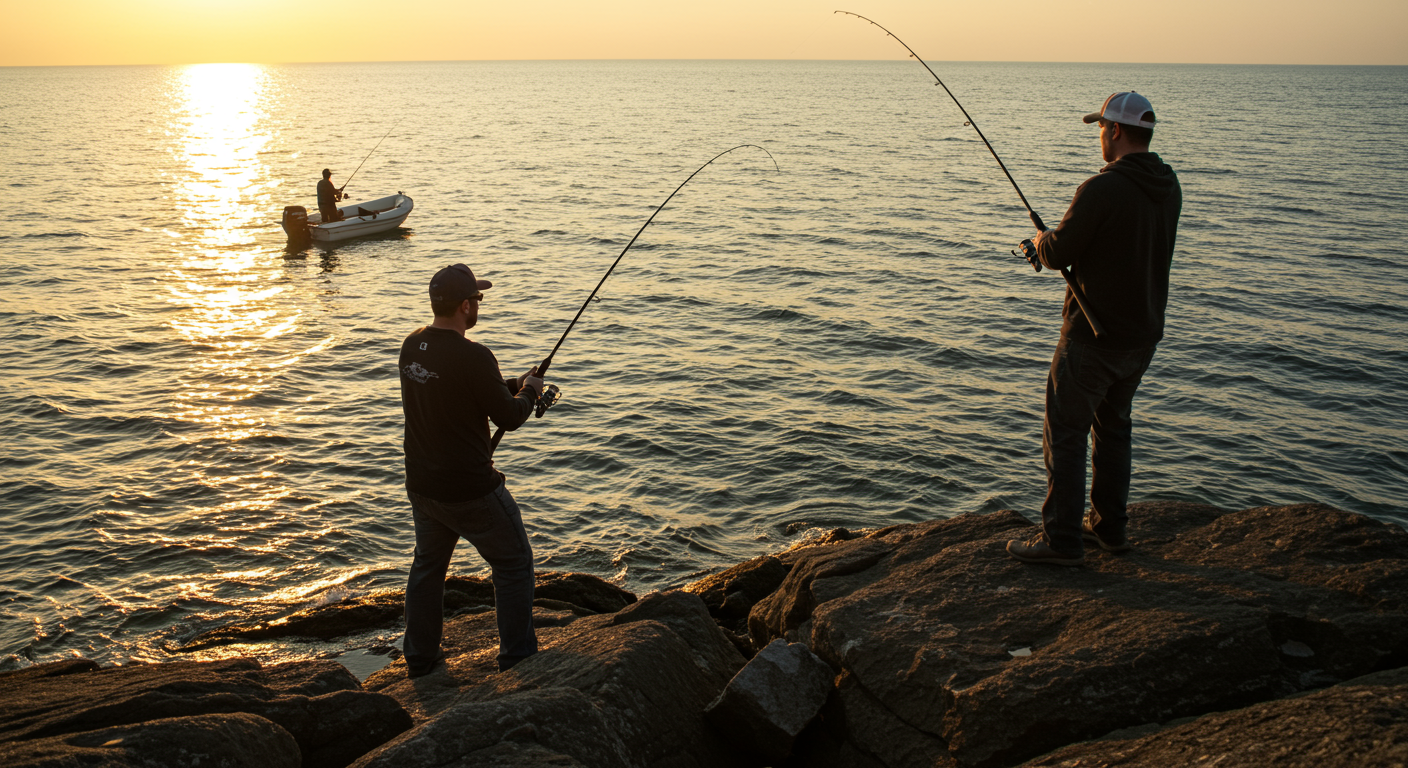
The platform you fish from dramatically affects which techniques are available to you, how much water you can cover, and which species you can realistically target. Both shore and boat fishing have genuine advantages — and skilled anglers learn to maximize both.
| Factor | Shore Fishing | Boat Fishing |
|---|---|---|
| Cost | Very low — rods, reels, bait only | High — boat, motor, fuel, maintenance |
| Access | Any public shoreline | Open water, remote areas, offshore |
| Mobility | Limited to shoreline walk | Full lake/ocean coverage |
| Species Range | Near-shore and structure species | All species including offshore pelagics |
| Best Techniques | Casting, float fishing, bottom rigs | Trolling, jigging, casting, offshore |
| Beginner Friendliness | Excellent | Moderate (boat handling required) |
| Weather Sensitivity | Low (can shelter in rain) | High (rough water is dangerous) |
Shore fishing excels in rivers, streams, ponds, and the edges of lakes. The bank angler's advantage is stealth — you can approach cautiously, minimizing disturbance. The boat angler's advantage is coverage and precision — depth sounders, trolling motors, and GPS let you fish specific depths and structures with pinpoint accuracy.
Casting Techniques Explained
The ability to place a lure or bait where you want it, when you want it there, separates productive anglers from frustrated ones. Casting accuracy is a fundamental skill that applies across virtually every fishing technique.
Overhead Cast
The most common and versatile cast. The rod loads (bends) during a controlled backswing, then releases stored energy forward to propel the lure. Ideal for spinning and baitcasting rods in open environments with no overhead obstructions.
Sidearm Cast
Delivers the lure on a horizontal plane, allowing you to skip lures under docks, overhanging trees, and low-clearance structures where fish hide. Essential for dock fishing and structure-heavy bass fishing.
Pitching and Flipping
Short, controlled lure delivery techniques for pinpoint accuracy at close range — typically 15 to 30 feet. Pitching involves a swinging pendulum motion; flipping is a vertical yo-yo delivery. Both are used for targeting bass in heavy cover at close range with virtually no splash.
Roll Cast (Fly Fishing)
Used in tight quarters where a traditional back cast is impossible. The angler lifts line into a loop on the water's surface and then drives the rod forward to roll the line out in front. Essential for small streams surrounded by bankside vegetation.
Jigging: The Complete Breakdown
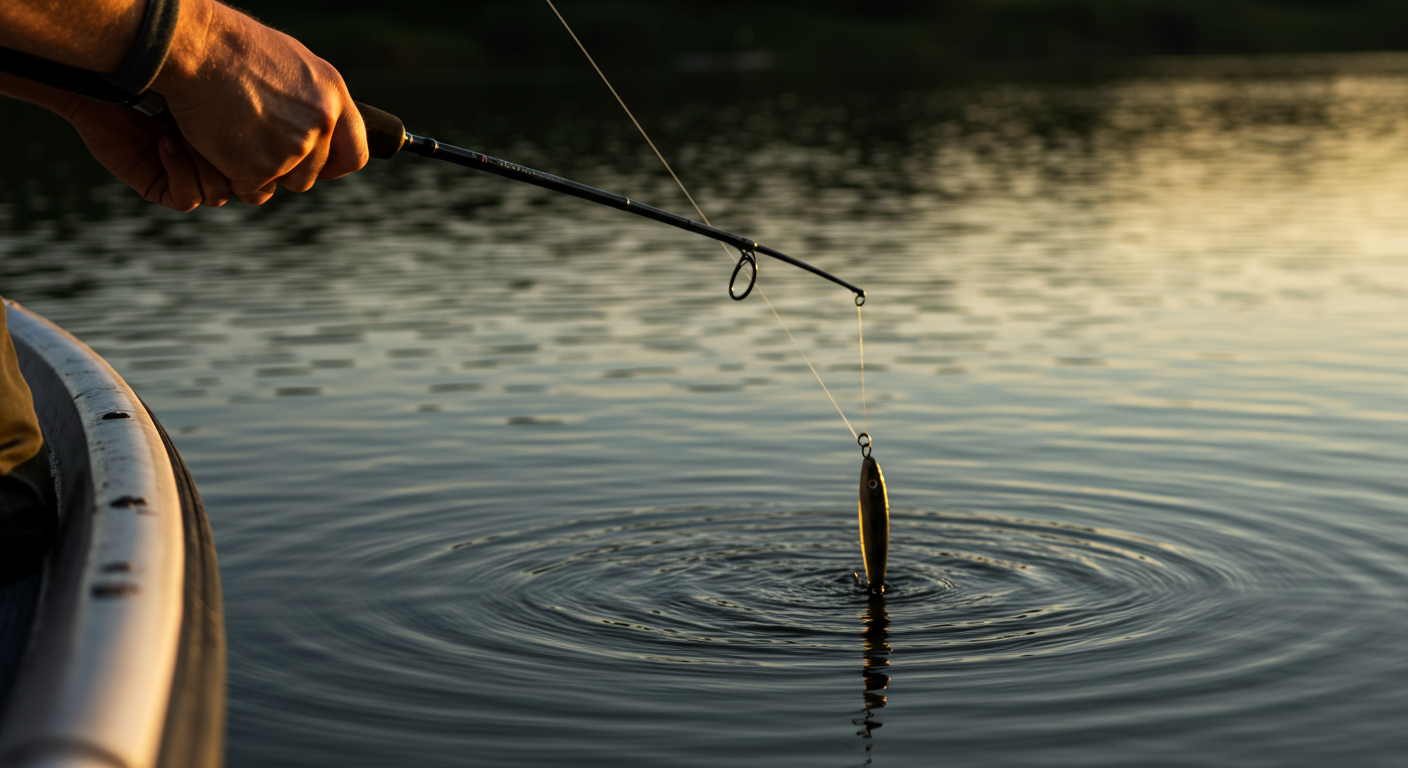
Jigging is among the most versatile and productive techniques in fishing. At its core, jigging involves imparting action to a weighted lure through rod tip movements — lifting, dropping, twitching, hopping, or swimming the lure to mimic injured baitfish or invertebrates.
Vertical Jigging
The lure is dropped directly below the boat, typically to structure or the bottom. The angler uses sharp upward strokes followed by controlled drops to create an erratic falling action — the most strike-triggering motion in fishing. Vertical jigging is lethal for walleye, crappie, striped bass, and offshore pelagics.
Pitch Jigging
The jig is cast to a specific target — a rock pile, a submerged tree — and then worked back to the angler with hops and pauses. The pause is critical: strikes almost always occur on the fall when the jig mimics a dying baitfish sinking helplessly.
Speed Jigging
An offshore technique involving large metal jigs dropped to the bottom and then ripped upward rapidly using long, powerful rod strokes with fast-retrieve reels. Extraordinarily effective for kingfish, amberjack, and large reef species. It is physically demanding but produces spectacular results.
Trolling for Freshwater and Saltwater Species
Trolling is the technique of dragging lures behind a moving boat at a controlled speed and depth. It is the premier technique for covering large areas of water, locating active fish, and targeting species that roam open water in search of baitfish.
- Speed: Freshwater trolling for walleye and trout typically runs at 1.5–2.5 mph. Saltwater trolling for wahoo can reach 12–14 mph.
- Depth control: Planer boards, downriggers, and diving crankbaits let trollers target specific depths with precision.
- Spread: Multiple rods fanned out at different depths and distances behind the boat increases the coverage area dramatically.
- Lure selection: Match lure speed capability to your target trolling speed. Skirted trolling lures for offshore; stick baits and crankbaits for freshwater.
Fly Fishing Fundamentals
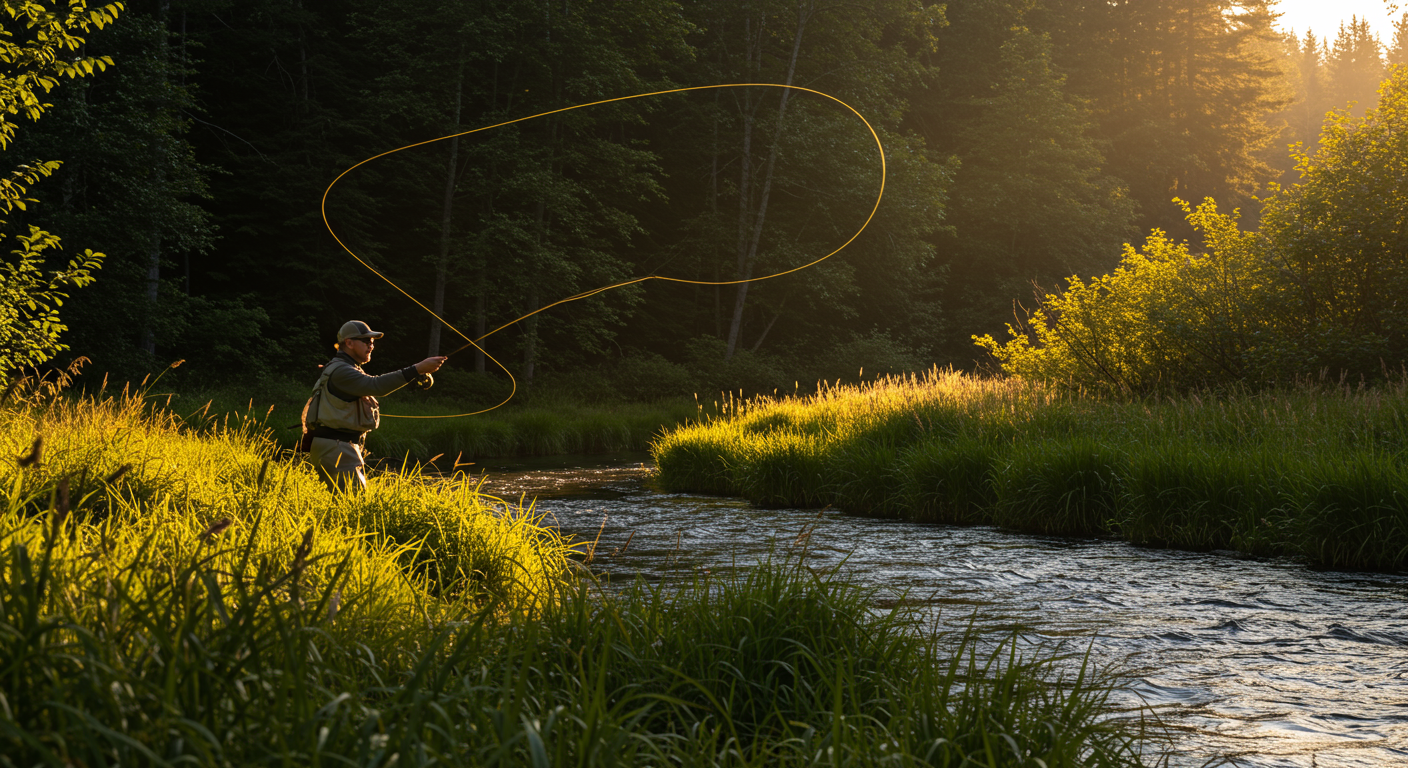
Fly fishing is a casting method in which the weight of the specialized fly line (rather than the lure) carries the almost-weightless artificial fly to the target. It is at once the most challenging and most artistically rewarding technique in fishing.
The Fly Casting Stroke
The fundamental overhead fly cast has four elements: the pick-up (lifting line off the water), the back cast (loading the rod behind you), the forward cast (driving the line forward), and the presentation (lowering the fly gently to the surface). The key is smooth acceleration to a crisp stop — the stop is what generates the loop that carries the line.
Match the Hatch
In stream trout fishing, the art of "matching the hatch" means identifying the specific aquatic insects that are hatching (emerging from the water as adults) and selecting an artificial fly that mimics them in size, profile, and color. A trout feeding on size 18 blue-winged olives will often ignore a size 12 elk hair caddis — but will rise confidently to the correctly matched pattern.
Bottom Fishing Strategies
Bottom fishing — presenting bait or lures on or near the seabed — is one of the most universally effective and accessible techniques in fishing. It targets the enormous variety of species that feed along the bottom, including catfish, carp, flounder, sea bass, grouper, snapper, and countless others.
Carolina Rig
A sliding sinker above a barrel swivel, followed by a leader to a hook. The sinker stays on the bottom while the bait can move naturally in the current or be dragged slowly across the bottom. One of the most versatile rigs in freshwater fishing for bass, catfish, and walleye.
Texas Rig
A bullet weight slides freely on the line, pegged or not, ahead of a soft plastic lure. Completely weedless design allows fishing in thick vegetation, wood piles, and rocky cover that would snag any other presentation.
Drop Shot Rig
The hook is tied above the terminal weight, suspending the bait at a precise distance off the bottom. Deadly for finesse fishing in deep clear water or highly pressured fisheries where fish have seen every other presentation.
Night Fishing Strategies
Fishing after dark transforms the fishing experience entirely. The darkness removes much of the visual advantage humans hold during the day and levels the playing field. Many species, including largemouth bass, catfish, walleye, and snook, are significantly more aggressive feeders at night than during the day.
- Use dark-colored lures (black, purple, dark blue) — they create a stronger silhouette against the lighter surface sky.
- Focus on sound and vibration — noisy crankbaits, buzzbaits, and surface poppers help fish locate the lure in darkness.
- Fish shallower than during the day — fish move inshore to feed at night.
- Use blacklights to illuminate fluorescent line and track strikes more easily.
- Move more slowly and quietly — sound travels far in calm nighttime water.
Ice Fishing Fundamentals
Ice fishing transforms frozen lakes into a completely different fishing environment. The challenge is accessing fish through a thick layer of ice — and then enticing those fish, which are in a cold-metabolic slow state, to bite.
Ice fishing tactics revolve around small, subtle presentations — tiny jigs tipped with wax worms or maggots, jigged with micro rod movements that barely disturb the lure. Electronics (sonar flashers) are invaluable for ice fishing, showing you fish approaching your jig in real time so you can time your presentation perfectly.
Seasonal Fishing Techniques
Fish behavior is dramatically seasonal. The technique that produces limits in June will fail completely in January — and understanding these seasonal patterns is what separates consistent fishermen from occasional ones.
| Season | Water Temp | Fish Location | Best Technique | Best Time of Day |
|---|---|---|---|---|
| Spring | 48–65°F | Warming shallows, spawning areas | Shallow crankbaits, swimbaits, spawn-bed sight fishing | Midday when water warms |
| Summer | 70–85°F | Deep water, thermocline, shade | Deep jigging, drop shot, night fishing topwater | Early morning, late evening, night |
| Fall | 55–70°F | Following baitfish schools, shorelines | Fast-moving lures, topwater, crankbaits | All day — fall feeding frenzy |
| Winter | 35–50°F | Deep, stable temperature water | Finesse jigging, drop shot, slow presentations | Midday when temperatures peak |
Technique Selection by Target Species
Matching your technique to your target species is fundamental. Here's a quick-reference guide for the most sought-after freshwater and saltwater species:
- Largemouth Bass: Flipping and pitching to cover, topwater at dawn/dusk, deep jigging in summer heat, crankbaits in spring and fall
- Trout: Fly fishing with nymphs and dry flies, ultralight spinning with small spinners, drift fishing with PowerBait in lakes
- Walleye: Bottom bouncing with spinners, vertical jigging, trolling crankbaits at night
- Catfish: Bottom rigs with cut bait, chicken liver, or stinkbait; tight-line fishing in current
- Striped Bass: Trolling umbrella rigs, eeling, jigging metal jigs, topwater plugs during surface blitzes
- Redfish/Red Drum: Sight casting soft plastics or gold spoons on shallow flats, bottom fishing with shrimp
- Offshore Tuna/Mahi: Trolling rigged baits and skirted lures, chunking with cut bait, popping and jigging on surface schools
Common Mistakes Anglers Make with Technique
- Fishing too fast: Moving through water before giving fish enough time to commit to the presentation. Slow down — especially in cold water.
- Ignoring line twist: Using lures that spin on the retrieve (like spinners) without a quality swivel creates line twist that degrades casting distance and causes tangles.
- Setting the hook too early or too late: Timing the hook set is species and technique specific. With circle hooks, don't set at all — just reel. With jigs and plastics, wait until you feel weight, then drive the rod.
- Neglecting knots: A poorly tied knot can fail at 30–50% of the line's rated strength. Use the Palomar or improved clinch knot and wet the knot before tightening.
- Over-fishing a spot: If fish aren't responding after several casts, they've either been spooked or aren't there. Move confidently and efficiently.
- Not varying the retrieve: A constant monotonous retrieve rarely outperforms an erratic one. Vary your speed, add pauses, change direction.
Technique Improvement Drills
Consistent improvement in fishing technique comes from deliberate practice. These drills will accelerate your development faster than any amount of unstructured fishing time:
- The Hula Hoop Drill: Lay a hula hoop on the lawn 25, 40, and 60 feet away. Practice casting into each target in sequence. This builds both accuracy and distance control.
- Jigging at the Dock: Drop a jig next to a dock piling into clear water and watch your lure. Experiment with different rod movements to see how each action translates underwater — this visual feedback is invaluable.
- Retrieve Variation Log: During each fishing session, deliberately vary your retrieve style every 10 casts — fast, slow, stop-and-go, twitching. Note which triggers strikes and in what conditions.
- Knot Tying Practice: Set a timer and practice tying your primary knots (Palomar, FG, improved clinch) until you can tie each one correctly in under 30 seconds without looking.
Safety Considerations on the Water
Fishing safety is never optional. The following best practices should be non-negotiable habits for every angler:
- Always wear a properly fitted PFD when fishing from a boat, kayak, or unstable shoreline
- Check the weather forecast before every trip — conditions can change rapidly
- Carry a first aid kit, whistle, signal mirror, and waterproof communication device
- Use barbless hooks or mash down barbs to reduce the severity of accidental hook penetration
- Keep a de-hooking tool and gloves in your kit for handling fish with sharp teeth or spines
- Stay hydrated and protect yourself from sun exposure during long sessions on the water
- File a float plan with someone on shore before fishing from a boat
- ✓ Study fish behavior before selecting any technique
- ✓ Read water structure to locate fish before making your first cast
- ✓ Match your technique to the season, species, and environment
- ✓ Master the fundamentals of one technique before adding new ones
- ✓ Vary your retrieve and presentation until you find what the fish want
- ✓ Keep a fishing journal — data from past trips is worth more than any tip
- ✓ Prioritize safety — no fish is worth an injury or worse
Frequently Asked Questions
Related Articles & Guides
Shore vs Boat Fishing: Which is Right for You?
TechniquesNight Fishing Techniques: A Complete Guide
TechniquesIce Fishing Tips and Essential Gear
TechniquesEssential Fly Fishing Techniques
TechniquesTrolling Techniques for Freshwater and Saltwater
TechniquesJigging Basics: The Complete Angler's Guide
TechniquesCasting Techniques: Master Every Type of Cast
TechniquesSelecting Fishing Techniques by Water Type
TechniquesMastering Hook Setting: Timing, Force, and Technique
TechniquesFishing Techniques for Beginners: Start Here
GuideBeginner Fishing Master Guide
GuideBecome a Better Angler Guide