There is something profound about the moment you commit to a fishing destination. You're not just planning a trip — you're choosing the type of story you want to live. Glassy salmon rivers beneath glacier-carved peaks in Alaska. Crystal clear tropical flats where permit shadows drift over white sand. Fog-wrapped mangrove channels in the Florida Keys where tarpon roll at first light. Every fishing destination offers its own specific magic, its own specific challenge, and its own specific reward. This guide is your map to finding yours.
Choosing Your Fishing Destination by Target Species
The single most important factor in destination selection is your target species. Unlike choosing a beach vacation where most tropical beaches are broadly similar, fishing destinations are highly specialized environments that excel for specific fish families. A world-class bass lake is usually a mediocre trout river. A legendary salmon stream is often a poor environment for redfish or snook.
Start your destination planning with this question: What fish do I most want to catch, and where in the world does that fish thrive? Then layer in practical considerations — budget, travel time, family requirements, seasonal timing, and skill level — to narrow down your choices.
| Target Species | Best US Destinations | Best Global Destinations | Peak Season |
|---|---|---|---|
| Largemouth Bass | Lake Fork TX, Okeechobee FL, Clear Lake CA | El Salto Mexico, Lake Baccarac Mexico | Spring (March–May), Fall (Sept–Nov) |
| Trout (Rainbow/Brown) | Madison River MT, Snake River ID, Deschutes OR | New Zealand, Patagonia Argentina, Iceland | Spring hatch (May–June), Fall (Oct–Nov) |
| Salmon (King/Chinook) | Kenai River AK, Columbia River OR/WA | Norway fjords, Scotland (Atlantic salmon) | May–August AK, Fall in PNW |
| Tarpon | Florida Keys, Tampa Bay FL | Belize, Costa Rica, Cuba | April–July (migratory schools) |
| Bonefish | Florida Keys, Islamorada FL | Bahamas, Mexico (Yucatán), Belize | Year-round in tropics |
| Halibut | Homer AK, Juneau AK | Norway, Iceland, BC Canada | June–August |
| Striped Bass | Chesapeake Bay MD/VA, Cape Cod MA | N/A (US endemic species) | Spring run (May), Fall migration (Oct–Nov) |
| Offshore Tuna | Outer Banks NC, San Diego CA, Galveston TX | Madeira Portugal, Azores, Cabo San Lucas | Summer (June–Sept for most regions) |
Best US States for Fishing: A Regional Overview
The United States is the world's most diverse freshwater fishing country. With 50 states spanning arctic tundra to tropical flats, arid desert to rainforest, there is literally no freshwater or coastal saltwater ecosystem that isn't represented somewhere in the continental US, Alaska, or Hawaii.
Alaska — The Last Frontier
No American state comes close to Alaska for sheer concentration of world-class fishing. Five species of Pacific salmon, monster halibut, Arctic grayling, rainbow trout on the Kenai Peninsula, and enormous lake trout in wilderness lakes all make Alaska the pinnacle of American fishing travel.
Florida — The Saltwater Capital
Florida's year-round warm climate, 1,350 miles of coastline, and extraordinary diversity of inshore and offshore species make it the most accessible saltwater fishing destination in North America. The Florida Keys alone offer more target species than most countries have in their entire territories.
Montana — Trout Country
Montana's spring-fed rivers — the Madison, Yellowstone, Gallatin, Big Hole, and Missouri — are legendary names in fly fishing worldwide. The state also holds some of the continent's finest lake trout and brown trout fisheries in its glacier-fed mountain lakes.
Texas — Bass and Gulf Fishing
Lake Fork, Sam Rayburn, Falcon Lake, and Amistad produce some of the biggest largemouth bass on Earth. Texas's Gulf Coast offers outstanding redfish, speckled trout, and offshore action. The state record bass (18.18 lbs) is a testament to the quality of the fishery.
Minnesota — Land of 10,000 Lakes
The Boundary Waters Canoe Area Wilderness, Mille Lacs Lake, and Leech Lake are legendary walleye and musky fisheries. Minnesota's inland fishing culture runs deep — it's a state where fishing isn't a hobby but a way of life.
Alaska Fishing: The Complete Overview
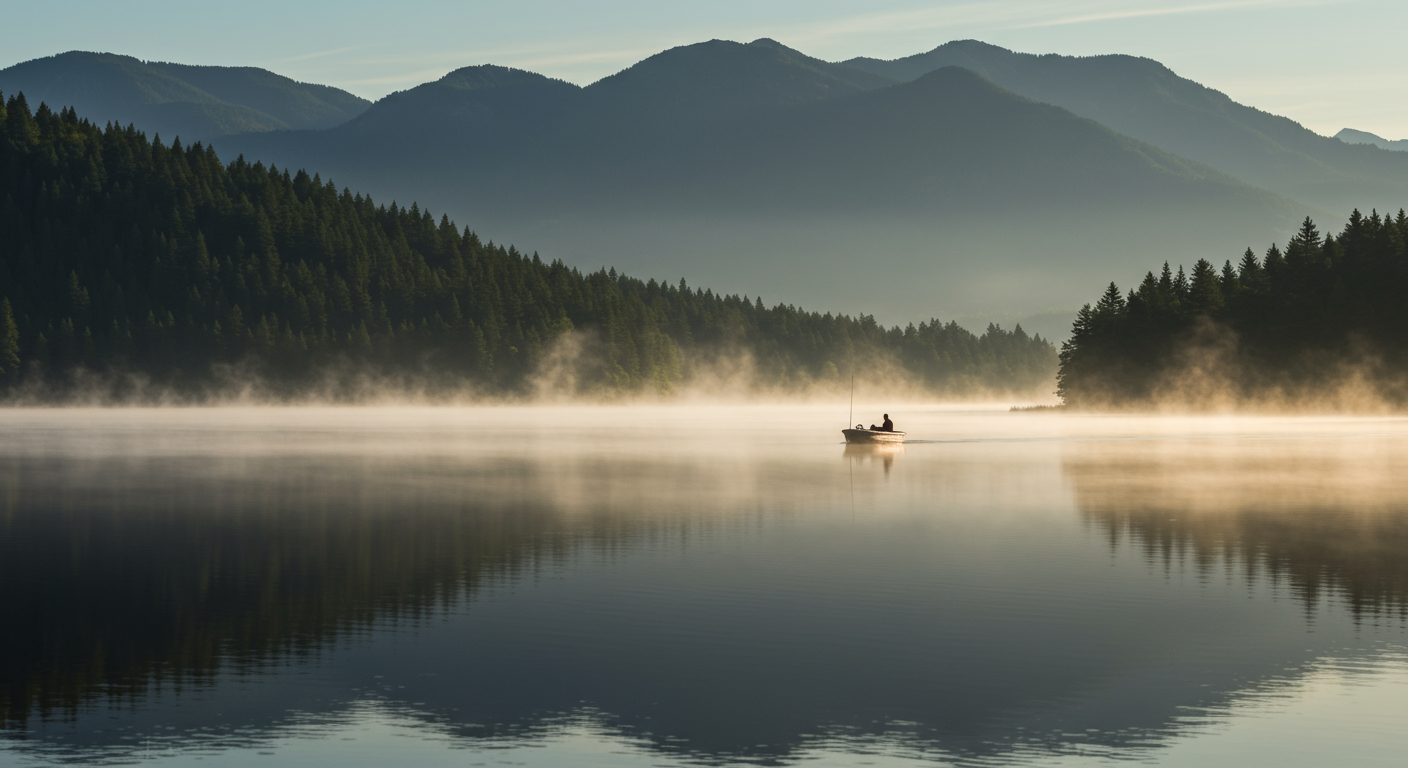
Fishing in Alaska is not just a fishing trip — it's an expedition. The scale of the landscape, the density of the wildlife, and the sheer quantity of fish available in its rivers and bays is unlike anything available in the lower 48. An August day on the Kenai River, with Chinook salmon the size of a man's leg rolling in clear current while bald eagles wheel overhead, is the kind of experience that redefines what fishing means.
Species and Seasons
- King Salmon (Chinook): Kenai River, Nushagak River — May through July
- Sockeye (Red) Salmon: Bristol Bay, Kvichak River — July through August (best single-species concentration on Earth)
- Silver (Coho) Salmon: Kodiak Island, Kenai Peninsula — August through October
- Pink and Chum Salmon: Widespread, July through September
- Rainbow Trout: Iliamna Lake watershed, Kenai River — June through September
- Pacific Halibut: Homer Spit (the Halibut Fishing Capital of the World), Juneau — June through August
Florida Fishing: The Saltwater Capital of America
Florida's extraordinary fishing diversity is a product of geography. The state sits at the intersection of the warm Gulf Stream current and the shallow, food-rich inshore flats, bays, and backcountry. No other region of the United States offers as many species, year-round accessibility, and approachability of stunning fishing experiences.
The Florida Keys — America's Fishing Crown
The 125-mile island chain stretching from Key Largo to Key West is arguably the most storied saltwater fishing destination in the world. The backcountry flats hold tarpon (the "Silver King") running to 200+ lbs, permit, bonefish, and redfish. The offshore waters produce mahi-mahi, sailfish, wahoo, yellowfin tuna, and grouper. The reefs between the flats and the deep hold snapper, amberjack, and cobia. A single day on the water in the Keys can realistically include five different species across three entirely different environments.
The Everglades — Backcountry Fishing
America's largest subtropical wilderness is also one of its most productive fishing environments. The Everglades backcountry mangrove channels hold snook, redfish, tarpon, and largemouth bass in a single interconnected ecosystem — a rare environment where freshwater and saltwater species overlap.
Tropical Flats Fishing
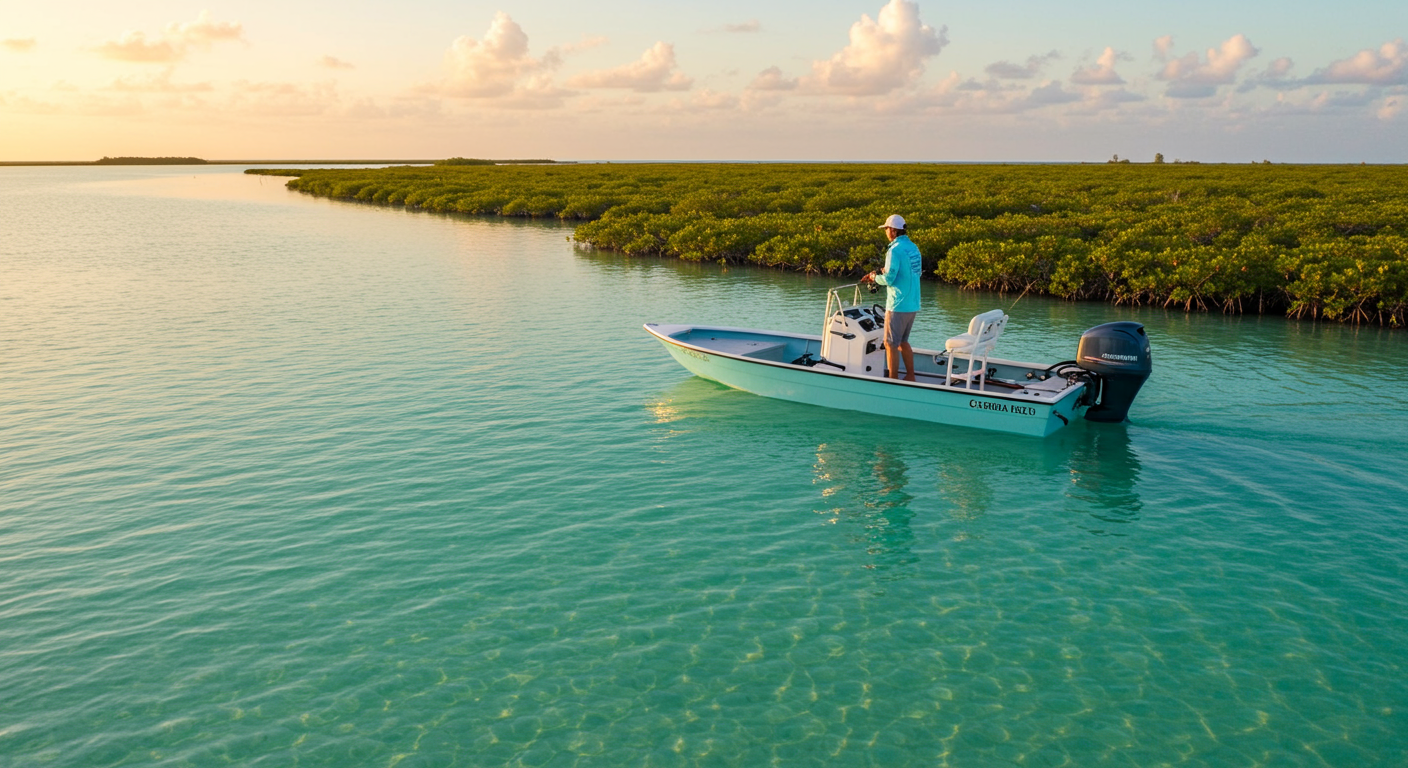
Sight fishing on tropical saltwater flats is one of the most visually dramatic and technically demanding experiences in all of angling. You stand on the bow of a silent, shallow-draft skiff, scanning the clear water for the dark shadows, tails, or wakes of fish moving across the sand and turtle grass. When you spot one, you must cast quickly and accurately — placing the lure or fly close enough to attract the fish, but not so close as to spook it.
The "Holy Trinity" of flats fishing targets — bonefish, permit, and tarpon — each present unique challenges. Bonefish are hyper-alert, fleet, and often school together on sand flats. Permit are notoriously difficult, feeding selectively on crabs and showing a maddening tendency to follow flies to the boat before refusing at the last second. Tarpon are the largest and most powerful quarry — a 100-lb tarpon on the flats is capable of a series of aerial leaps that have left many anglers speechless.
Charter Fishing: Getting the Most from Guided Trips
Booking a fishing charter is the fastest route to fishing an unfamiliar destination productively. The captain's local knowledge — the precise spots, current conditions, bait choices, and seasonal patterns — is worth far more than any guide or online forum when you're fishing in a new place.
- Shared charters: 4–6 anglers split the cost of the boat. Budget option; less customizable. Best for offshore trips where all anglers are targeting the same species.
- Private charters: You book the entire boat for your group. Complete control over species, technique, and schedule. Best for families, experienced anglers, or when targeting specific fish.
- Inshore vs offshore: Inshore charters (flats, bays, backcountry) typically run half-day (4 hours) or full-day (8 hours). Offshore charters typically run 10–14 hours and venture 20–80+ miles offshore.
- Researching captains: Check reviews on Google, Yelp, and TripAdvisor. Look for captains who post photos of their catches regularly on social media. Ask local bait shops for recommendations — they see which captains are consistently productive.
Fishing Lodges: What to Expect and How to Choose
Full-service fishing lodges represent the premium tier of fishing travel. They provide accommodation, meals, guided fishing, gear, tackle, licenses, and all logistics in one package — you simply show up and fish. For remote destinations where independent travel is impractical (Alaska, Canada, Patagonia), lodges are often the only practical option.
- All-inclusive packages: Lodge packages typically run $800–$5,000+ per person per day in premium wilderness destinations. Alaska salmon lodges average $5,000–$10,000 for a 5–7 day package. Belize flats lodges run $3,000–$6,000 for a week.
- What's included: Most lodges include lodging, all meals, daily guided fishing, fishing licenses, boats, and tackle. Flights to the lodge, alcoholic beverages, and gratuities are typically extra.
- Evaluating lodges: Look for lodges with a verifiable catch history, certified guides, clear fishing rules, and commitment to catch-and-release practices. Ask directly about guide-to-angler ratios (2:1 is ideal), equipment quality, and recent catch reports.
Seasonal Destination Planning
Every fishing destination has its own seasonal rhythm — periods of peak productivity and periods that are best avoided. Arriving at the right destination at the wrong time of year is one of the most common and avoidable fishing travel mistakes.
| Season | North (AK, MT, MN) | Southeast (FL, GA) | Southwest (TX, AZ) | Offshore East Coast |
|---|---|---|---|---|
| Spring (Mar–May) | Ice-out — trout and pike active | Tarpon migration begins, bass spawning | Bass pre-spawn, Gulf red snapper season | Cobia run, striped bass north migration |
| Summer (Jun–Aug) | Peak Alaska salmon, trout hatch | Offshore dolphin/tuna, offshore sailfish | Deep largemouth, offshore Gulf yellowfin | Tuna, mahi offshore; stripers on cape |
| Fall (Sep–Nov) | Coho salmon, last trophy trout window | Snook and redfish peak in Florida | Excellent Gulf snapper/grouper, bass active | Striped bass peak run, bluefin tuna |
| Winter (Dec–Feb) | Ice fishing walleye, pike, perch | Florida winter bass peak, snook active | Trout stocking season, limited Gulf offshore | Offshore wreck grouper, inshore flounder |
Family-Friendly Fishing Destinations
Fishing with children requires destinations that offer high fish density, accessibility, non-toxic environments, and enough non-fishing activities to keep younger participants engaged between action. The best family fishing trips balance catching with exploring.
- Yellowstone National Park, Wyoming: Iconic scenery, catch-and-release fishing for cutthroat trout, and accessible river fishing make this a bucket-list family fishing trip
- Ozark National Forest, Missouri/Arkansas: The Bull Shoals and Table Rock Lake area offers excellent bass, crappie, and trout fishing with full resort infrastructure
- Outer Banks, North Carolina: Easy surf fishing for bluefish, pompano, and drum — kids can catch fish from the beach without a boat
- Lake Tahoe, California/Nevada: Mackinaw lake trout and kokanee salmon in stunning mountain scenery with world-class resort infrastructure
Remote Wilderness Fishing
For anglers who have experienced the crowded weekend boat ramp and the heavily pressured public water experience, remote wilderness fishing represents the ultimate upgrade. Fish that have seen few or no lures, rivers you access only by floatplane or multi-day pack trip, and a quality of solitude and natural beauty that is increasingly rare on this planet.
Remote fishing destinations in the lower 48 include the Boundary Waters Canoe Area Wilderness (Minnesota), the Bighorn Mountains of Wyoming, the Bob Marshall Wilderness of Montana, and the Escalante River system in Utah. Internationally, the Patagonian Rio Baker and Rio Palena systems in Chile, the wilderness rivers of Kamchatka (Russia), and the untouched streams of Bhutan represent the pinnacle of remote angling.
Fishing Regulations Awareness
Fishing regulations exist to protect fish populations and ensure the long-term sustainability of the fishery. Regulations vary significantly by state, species, water body, and season. Ignorance of the regulations is never a legal defense — and violations can result in substantial fines, license revocation, and equipment confiscation.
- Always purchase the appropriate license for the state and water type (freshwater/saltwater) before fishing
- Research size and bag limits for target species — these change seasonally and by location
- Be aware of special-use regulations: fly-fishing only sections, barbless-hook requirements, and no-kill zones
- International fishing may require permits, guide requirements, or import restrictions on tackle
- When in doubt, contact the local fish and wildlife agency directly — wardens are generally helpful to anglers who make the effort to comply
- ✓ Match your destination to your target species and the season when that species peaks
- ✓ Alaska and Florida are the two crown jewels of American fishing travel
- ✓ Charter captains offer the fastest route to success in any unfamiliar destination
- ✓ Always research regulations before your trip — ignorance is not a legal defense
- ✓ Family fishing trips work best at high-density, easily accessible fisheries
- ✓ Remote wilderness fishing offers the most unspoiled experience but demands thorough preparation
- ✓ The best fishing trip is planned around the fish's calendar, not your convenience
Frequently Asked Questions
Related Articles & Guides
Best US Lakes for Freshwater Fishing
DestinationsAlaska Fishing Trip Planning: The Complete Guide
DestinationsFlorida Keys Fishing Guide: The Ultimate Resource
DestinationsEverglades Fishing Guide: Species, Tips, and Charters
DestinationsFishing Charters in Turks and Caicos
DestinationsTop Bonefishing Destinations Around the World
DestinationsBest Freshwater Fishing Spots Across America
DestinationsUnderrated US Fishing Spots Worth the Drive
DestinationsFishing Seasons at America's Top Lakes
GuideComplete Fishing Gear Guide
GuideBeginner Fishing Master Guide