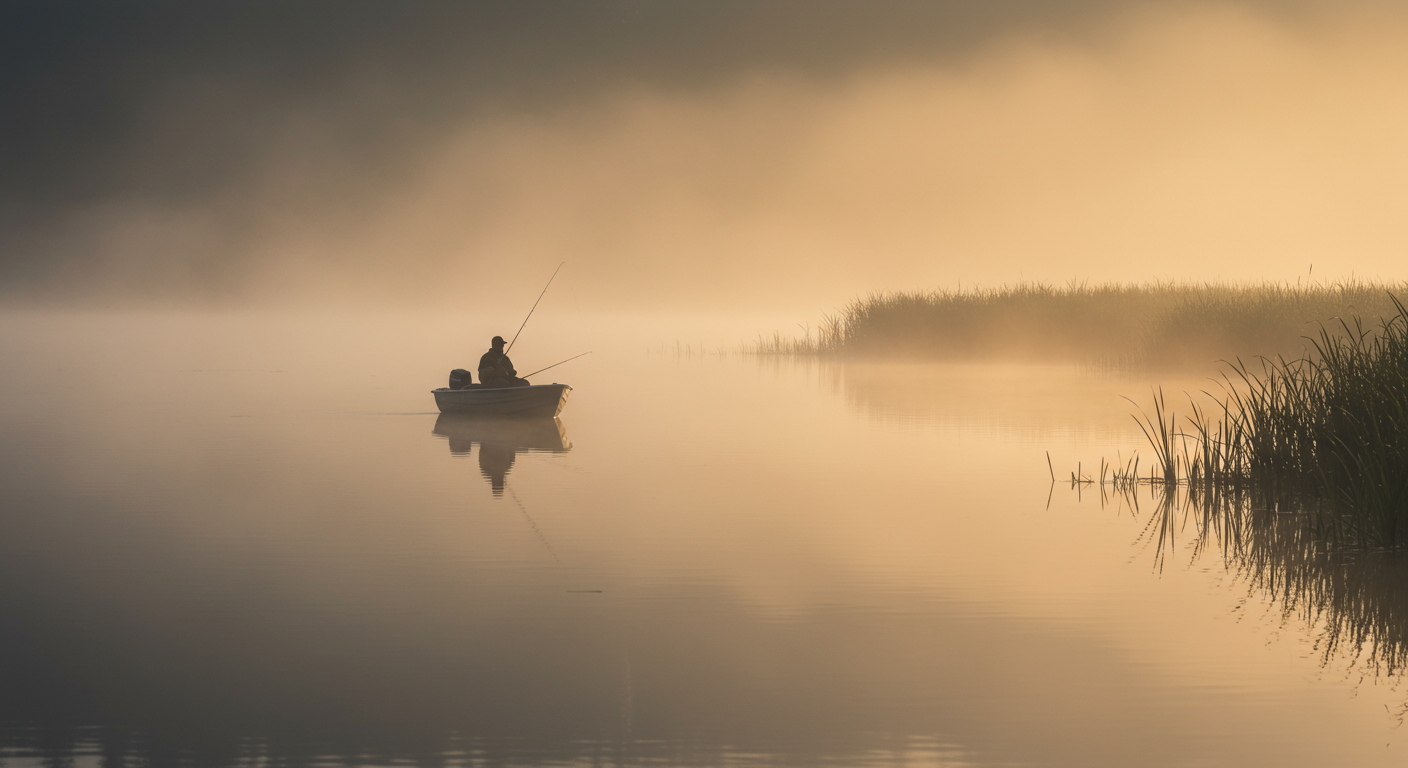
There's a meaningful difference between fishing and angling. Fishing is the activity — being on the water, rod in hand, line in the water. Angling is the practice — deliberate, thoughtful, continuously improving pursuit of fish. Most people who pick up a rod fish. A relative few become genuine anglers. This guide is about making the transition from one to the other: developing the mindset, the habits, the technical skills — from reading water to find fish to understanding tides and currents — and the strategic intelligence that defines an angler who finds fish consistently, in all conditions, across any water. Ready to sharpen your presentation skills? Our casting accuracy drill guide is a great place to start.
Developing Patience and Observation: The Foundation of Excellence
Every elite angler will tell you the same thing when pressed: the best hours they ever spent fishing were not the hours when they were casting. They were the hours when they were watching — sitting quietly in a boat before sunrise, watching the shoreline come alive; standing motionless at a river's edge, observing a trout's feeding rhythm before making a single presentation; noting how baitfish scatter when a predator pushes through.
Patience, in fishing, is not passive waiting. It is active observation. The patient angler is watching for the subtle cues that reveal where fish are, what they're eating, and how active they are. They're processing information that impatient anglers miss because they're too busy covering water, changing lures, and wishing they were somewhere else.
Developing Your Observation Practice
- The silent 10: Before making your first cast at any new spot, spend 10 minutes in complete silence simply watching. Look for surface activity, bird behavior, current patterns, and any visual signs of fish presence.
- Log the "nothing" trips: A day with no fish is a day with data. What were the conditions? What did you observe? What hypotheses can you form? The most valuable fishing knowledge comes from understanding why fish weren't where you expected them to be.
- Study feeding fish: When you find actively feeding fish, resist the immediate urge to cast. Watch for 2–3 minutes. What are they eating? How frequently are they feeding? What direction are they moving? This information makes your first cast exponentially more effective.
Learning from Failed Fishing Trips: The Angler's University
The fishing trip that produces nothing is, paradoxically, one of the most educational experiences available to an improving angler. When you catch fish, the feedback loop is straightforward: this worked. When you don't catch fish, the information is richer: every hypothesis you tested has either been eliminated or refined.
Elite anglers approach slow days with genuine curiosity rather than frustration. They ask: Were fish simply absent from this water, or were they present and refusing my presentations? If present, what variables might explain the non-response? Was my presentation depth wrong? Was my retrieve speed wrong? Was my lure size inappropriate? Did the weather change between trip planning and execution?
The Post-Trip Debrief Process
After every fishing trip — successful or not — spend 10 minutes answering these questions in your fishing journal:
- What were the conditions when I arrived? (Weather, water temperature, tide/wind, pressure)
- What did I observe in the first 10 minutes that set my expectations?
- What techniques and presentations did I try, and what were the results of each?
- What did I see or experience that I didn't expect?
- What would I do differently on the next trip to these conditions?
- What single thing did I learn today that I didn't know yesterday?
Tracking Fishing Patterns: The Data-Driven Angler
Patterns are the holy grail of fishing intelligence. A "pattern" is a repeatable set of conditions under which fish are predictably catchable — a specific depth range, a specific lure type, a specific time window, a specific structure type. Finding a pattern on one body of water and being able to replicate it on similar water is the skill that separates competent recreational anglers from genuinely expert ones.
Types of Patterns to Track
- Depth patterns: Are fish consistently holding at 8–12 feet? What changes when they're at 20 feet versus 5 feet?
- Structure patterns: Are fish consistently on rocky points? Are they only around submerged wood? On the edges of grass beds or inside them?
- Time patterns: Is the bite consistently hot from 6–8am and then dead? Does it pick back up at 5pm?
- Technique patterns: Are fish responding to a fast burn or a slow crawl? Topwater or bottom?
- Bait/color patterns: Is chartreuse outperforming natural colors today? Are fish ignoring plastics and crushing crankbaits?
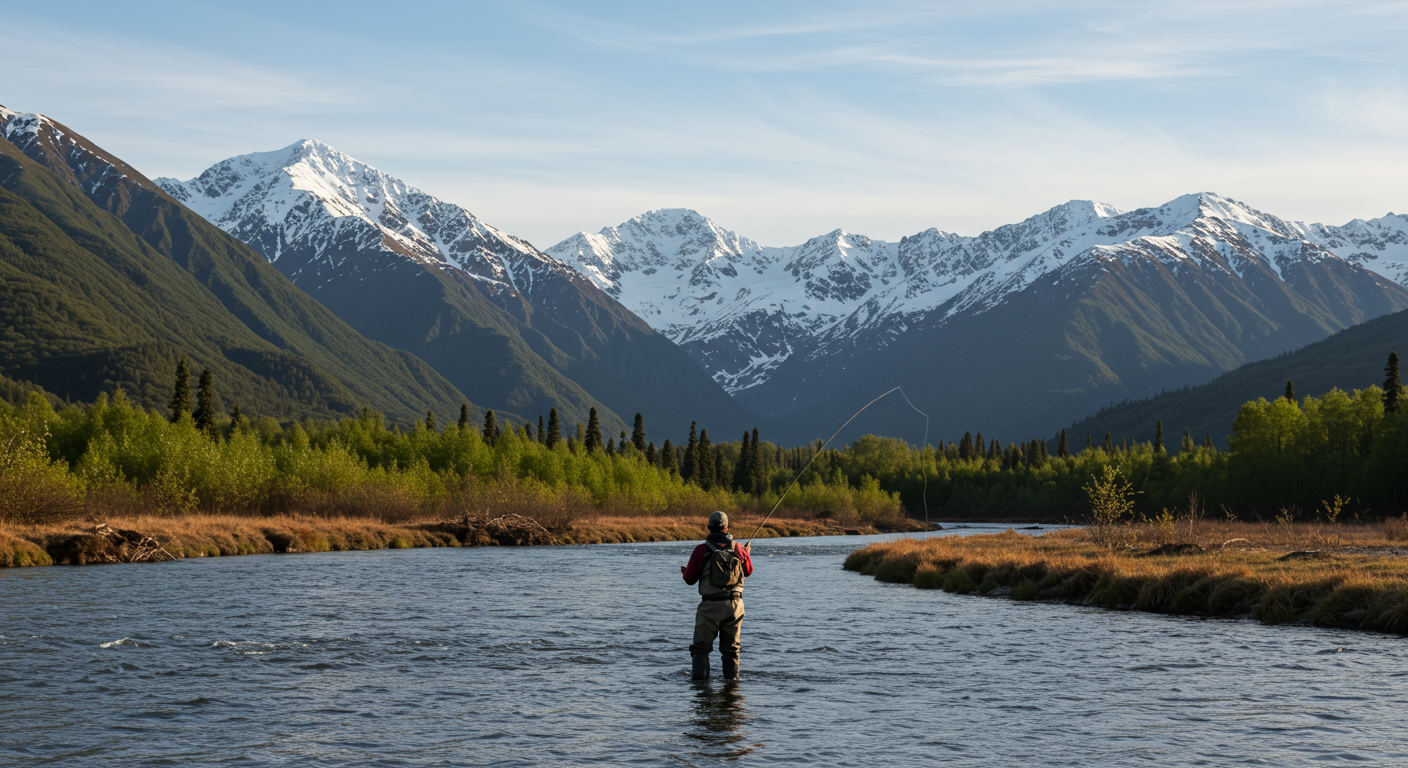
Weather and Tide Awareness: Fishing Nature's Calendar
Fishing is, at its core, an exercise in environmental intelligence. The most technically skilled angler in the world will consistently underperform a moderately skilled angler who fishes the right conditions at the right time. Understanding how weather systems, tidal cycles, moon phases, and seasonal patterns affect fish behavior is a force multiplier for every other skill you develop.
Barometric Pressure and Fish Behavior
Barometric pressure — the weight of the atmosphere pressing down on the water's surface — has a measurable effect on fish physiology and behavior. Fish have a lateral line sensory system and a swim bladder that are sensitive to pressure changes.
- Rising pressure (clearing skies after a storm): Fish activity often increases as pressure rises, especially if the rise is gradual. Fish that were lethargic during the storm become progressively more active.
- High, stable pressure (clear, calm days): Fish activity is predictable. Fish hold in their typical locations and respond to well-presented lures. These are "technical fishing" days.
- Falling pressure (approaching storm): Often triggers the best fishing of the entire weather cycle. Fish feed aggressively before the pressure drops, almost as if they're stocking up. Topwater and fast-moving lures produce explosive bites on pre-storm afternoons.
- Low pressure (during a storm): Most fish become lethargic and reluctant to bite. Finesse presentations and natural baits are the most reliable option.
- Post-cold-front (stable high pressure, blue skies, wind shift): Often the most difficult fishing conditions. Fish retreat deep and require slow, subtle presentations at precise depth.
Tidal Influence on Saltwater Fishing
Tides create current, and current creates feeding opportunities. Most saltwater species are far more active when water is moving than during slack tide. As a general rule, the two hours before and after both high tide and low tide are the most productive fishing windows in tidal environments. Fish position themselves at the upstream edge of structure to intercept bait washing through in the current — channels, cuts, bridge pilings, and mangrove points all become fish magnets on a moving tide.
| Tide Phase | Fish Activity | Best Locations | Recommended Technique |
|---|---|---|---|
| Incoming (flood) | High — fish moving onto flats and into creeks | Flats, creek mouths, marsh edges | Live bait, crab imitations, topwater |
| High Slack | Moderate — fish spread out over structure | Weed beds, mangroves, submerged structure | Jigging, soft plastics |
| Outgoing (ebb) | High — bait pouring out of creeks and flats | Channel edges, creek mouths, tidal rips | Fast-moving lures, live bait in current |
| Low Slack | Low — fish in deeper water, inactive | Deep channel holes | Bottom fishing, patience |
Skill Drills for Casting Accuracy and Distance
Casting is a physical skill that plateaus when not actively practiced. Most intermediate anglers can cast adequately but miss subtle improvements in accuracy, distance, and lure control that compound into meaningful fishing advantages over time. These drills address those specific gaps.
The Clock Face Drill
Mark 12 spots in a circle with specific targets (hula hoops, buckets, frisbees) at varying distances, representing hours on a clock face at distances from 25 to 60 feet. Practice casting to each "hour" in sequence, alternating forward casts with sidearm casts. This drill builds all-direction accuracy and muscle memory for different casting angles.
The Skip Cast Practice
Practice the sidearm skip cast by skipping flat stones or a practice plug across a pool of still water, targeting a specific dock structure. The ability to skip a lure accurately under docks and low overhangs opens entire areas of the water column that are inaccessible to straight-overhead casters.
The Distance Benchmark
Measure your maximum casting distance with your primary lure weight quarterly. Track improvement over a full season. Work on generating more distance through rod loading (using the rod's flex to store and release energy) rather than brute force. A smoother, better-loaded cast will typically outperform a harder, rougher cast by 10–20% in distance.
Fish Location Strategy: Finding Fish Before You Cast
Elite anglers are fundamentally strategists. Their primary activity — even on the water — is not casting. It is locating fish. Casting comes only after the strategic work of identifying where fish are most likely to be, why they would be there, and which approach gives the highest probability of a strike.
The "Big Picture" Approach
- Ecosystem analysis: What food sources are dominant in this water right now? What are fish likely feeding on? This dictates lure choice before location choice.
- Macro location: Which areas of this body of water hold the type of fish I'm targeting, in the current season and weather pattern?
- Micro location: Within the macro area, which specific features create the highest probability of fish concentration? A specific rock, a depth transition, a shade line?
- Approach direction: How do I position myself (boat or feet) relative to this structure to present the lure naturally, without alerting the fish to my presence?
Gear Mastery Progression
Gear mastery is not about owning expensive equipment — it's about deeply understanding how your equipment performs across its full range of capabilities and limitations. An angler who has fished the same rod and reel for five seasons knows exactly how it loads on a long cast, what tension pressure is on the drag at a specific setting, and what lure weights it casts most accurately. This intimate knowledge is a genuine performance advantage.
- Stage 1 — Functional competence: Can cast, retrieve, fight fish, and change lures efficiently. 0–1 year.
- Stage 2 — Technical mastery: Understands casting mechanics well enough to maximize distance and accuracy; can tune drag to exact specifications; knows line weight's effect on lure action. 1–3 years.
- Stage 3 — Gear optimization: Selects specific rods, reels, and line combinations for specific techniques; modifies equipment (split rings, hook upgrades); makes gear adjustments mid-session based on conditions. 3–7 years.
- Stage 4 — Equipment design understanding: Understands why manufacturers make specific design choices; evaluates new products against performance benchmarks; knows which innovations matter and which are marketing. 7+ years.
Fishing Journals and Data Tracking
The fishing journal is the single most underutilized tool in recreational angling. The majority of anglers develop skills through informal, unstructured experience — fishing, catching or not catching, and starting over without systematic documentation of what worked and why. The journaling angler compresses that learning dramatically.
What to Record
- Date, location (specific spot with GPS coordinates if possible), time range fished
- Air temperature, water temperature, sky conditions, wind direction and speed
- Barometric pressure trend (rising/falling/stable) — download a barometer app
- Tide stage and phase (saltwater)
- Moon phase (full/new moon phases consistently affect certain fisheries)
- Techniques tried, lures and colors used, depths fished
- Catch results: species, size, time of each catch, technique used for each fish
- Notable observations: baitfish activity, bird behavior, surface temperature changes, weed conditions
- What you'd do differently next time
Competitive Fishing Insights
Tournament fishing exists on a spectrum from local club events to professional circuits like the Bass Pro Tour and FLW Tour with six-figure prize purses. Whether you ever fish a tournament or not, studying competitive fishing is one of the highest-leverage ways to accelerate your angling intelligence.
Tournament anglers face a unique pressure: they must locate, pattern, and catch fish in an unfamiliar or competitive environment under strict time constraints. The strategies they develop to solve this problem — efficient pre-fishing, pattern recognition, equipment optimization, and mental focus under pressure — translate directly to recreational fishing improvement.
- Study tournament win reports — they detail exactly where anglers found fish, what they were doing, and why the specific technique worked on that specific day
- Watch professional tournament live coverage — observe how pros position their boats, work specific structure, and adapt when a pattern stops producing
- Fish a local club tournament — the pressure of a time limit and competitive environment exposes weaknesses in your game that comfortable recreational fishing never reveals
Mental Focus and Endurance on the Water
Long fishing sessions — particularly multi-day tournaments or extended offshore trips — demand a level of mental focus and physical endurance that most recreational anglers underestimate. Physical fatigue leads to sloppy presentations, missed strikes, poor decision-making, and safety lapses. Mental fatigue produces the same degradation of performance.
Managing Mental Energy on the Water
- Fish with intention: Every cast should have a deliberate target, a specific retrieve plan, and an expected result. Mechanical, mindless casting produces mechanical, mindless results.
- Take meaningful breaks: On long fishing sessions, schedule 10-minute breaks away from active fishing to observe, plan, eat, and reset. The mental freshness after a deliberate break is measurable.
- Control what you can control: Weather, fish activity, and luck are outside your control. Your preparation, technique execution, and decision-making are within your control. Focus exclusively on the latter.
- Manage expectations by trip type: Not every trip is a trophy hunting mission. Sometimes the most productive mental approach is simply enjoying the experience of being on the water, even when fish aren't cooperating.
Seasonal Learning Strategies
Each season of the fishing calendar offers a different curriculum of skills to develop. The angler who actively plans their seasonal learning accelerates through skills that would take years to develop organically.
- Spring: Study spawning behavior and pre-spawn feeding patterns. Learn sight-fishing techniques. Develop crankbait and swimbait presentation skills as fish move shallow.
- Summer: Deep-water technique focus — vertical jigging, drop-shotting, understanding thermoclines. Develop night fishing skills. Learn offshore fishing basics if applicable.
- Fall: Pattern recognition and covering water efficiently. Develop reaction bait skills (topwater, hard jerkbaits) as fall baitfish patterns emerge. Learn to recognize the fall migration of gamefish following baitfish schools.
- Winter: Finesse fishing mastery — the patience and precision required in cold water develops your most delicate presentation skills. Study fish behavior through ice fishing (which provides direct observation of fish response to presentations through the ice hole).
Fishing with Mentors: The Accelerated Path
No book, guide, or video can fully replicate the learning experience of fishing alongside someone who is genuinely better than you. A skilled mentor shows you, in real time, how they see the water, make decisions, respond to changing conditions, and execute presentations at a level that makes your current ability visible to you in a way that no amount of solo practice can.
The most accessible form of formal mentorship is booking a professional guide. A guide's expertise is worth far more than the cost of the trip when approached as a learning experience rather than simply a fish-catching service. Come prepared with specific questions. Watch everything. Ask "why" as often as "how."
Building Long-Term Angling Success
The angler who sustains improvement over decades does so through a combination of discipline and genuine love for the pursuit. Discipline ensures that every trip produces learning — through journaling, deliberate practice, and honest self-assessment. Genuine love for fishing ensures that the discipline never feels like work.
- Set specific, measurable fishing goals each season: a target species you've never caught, a technique you haven't mastered, a distant destination you've always wanted to fish
- Maintain an active connection to the fishing community — local clubs, online forums, and fishing events keep your motivation fresh and your knowledge current
- Teach what you know — explaining fishing concepts to beginners forces you to articulate your own understanding more precisely and often reveals gaps in your own knowledge
- Respect the resource — the commitment to sustainable practices, ethical fishing, habitat conservation, and regulation compliance ensures the fisheries you love will exist for future generations
- ✓ Observe before you cast — the patient angler always outperforms the impulsive one
- ✓ Learn as much from failed trips as successful ones — record everything
- ✓ Track patterns obsessively — patterns are the currency of consistent catching
- ✓ Understand weather and tides as deeply as any technique or gear choice
- ✓ Fish deliberately — every cast should have intention, a target, and a plan
- ✓ Seek mentorship actively — one day with a great angler accelerates years of development
- ✓ Love the pursuit itself — the angler who is genuinely curious about fish will always improve
Frequently Asked Questions
Related Articles & Guides
Reading Water to Find Fish: Expert Guide
TutorialsUnderstanding Tides and Currents for Better Fishing
TutorialsCasting Accuracy Drills to Improve Your Fishing
TutorialsBass Fishing Techniques: Expert Strategies
TechniquesTrout Fishing with Flies: Complete Method Guide
TechniquesEffective Saltwater Fishing Techniques
TechniquesJigging Basics: The Complete Angler's Guide
TechniquesFishing Fast Water: Rivers, Runs, and Rapids
TechniquesSelecting Fishing Techniques by Water Type
GuideComplete Fishing Techniques Guide
GuideComplete Fishing Destinations Guide