Walk into any fishing tackle shop and you'll be confronted with thousands of products, each claiming to be essential. The truth is, consistently catching fish doesn't require a vast collection of gear — it requires the right gear, used correctly, in the right situations. This guide cuts through the marketing noise to give you a clear, expert-level understanding of every category of fishing equipment — from choosing the right fishing rod to selecting the perfect fishing line — so you can build a tackle collection that actually gets fish in the net. If you're building your first kit on a budget, our budget fishing gear guide for beginners is an ideal companion read.
Types of Fishing Rods Explained
Fishing rods are purpose-built tools. The materials, action, power, and length of a rod are all engineered to optimize performance for specific techniques, line weights, and lure sizes. Using the wrong rod for a technique is like driving nails with a screwdriver — you'll get the job done eventually, but it'll be unnecessarily difficult.
Rod Materials
- Fiberglass: Heavy but nearly indestructible. Excellent slow-moderate action makes it ideal for crankbaits and reaction baits where the bend absorbs strikes and reduces fish throwing hooks. Budget-friendly and often overlooked by intermediate anglers.
- Graphite/Carbon Fiber: The dominant material in modern fishing rods. Light, sensitive, and available in a wide range of stiffness (modulus). Higher-modulus graphite is more sensitive but more brittle. Mid-modulus graphite offers the best balance for most anglers.
- Composite (Glass + Graphite): Blends the sensitivity of graphite with the toughness of fiberglass. Popular for crankbait and swimbait rods where a forgiving but sensitive blank is ideal.
Rod Power Classifications
Power describes a rod's lifting strength and resistance to bending under load. Match your power to your target species and lure weight:
- Ultralight: Panfish, trout, small streams — 1–6 lb line, 1/32 – 1/8 oz lures
- Light: Trout, bass finesse, small bass — 4–8 lb line, 1/16–3/8 oz lures
- Medium-Light: Crappie, walleye, inshore saltwater — 6–10 lb line, 1/8–3/8 oz lures
- Medium: All-purpose bass, walleye — 8–14 lb line, 1/4–5/8 oz lures
- Medium-Heavy: Bass in cover, inshore saltwater — 12–25 lb line, 3/8–1 oz lures
- Heavy: Large bass, offshore, big catfish — 20–40 lb line, 3/4–2 oz lures
- Extra Heavy: Big game, heavy jigging, musky — 40+ lb line, 2+ oz lures
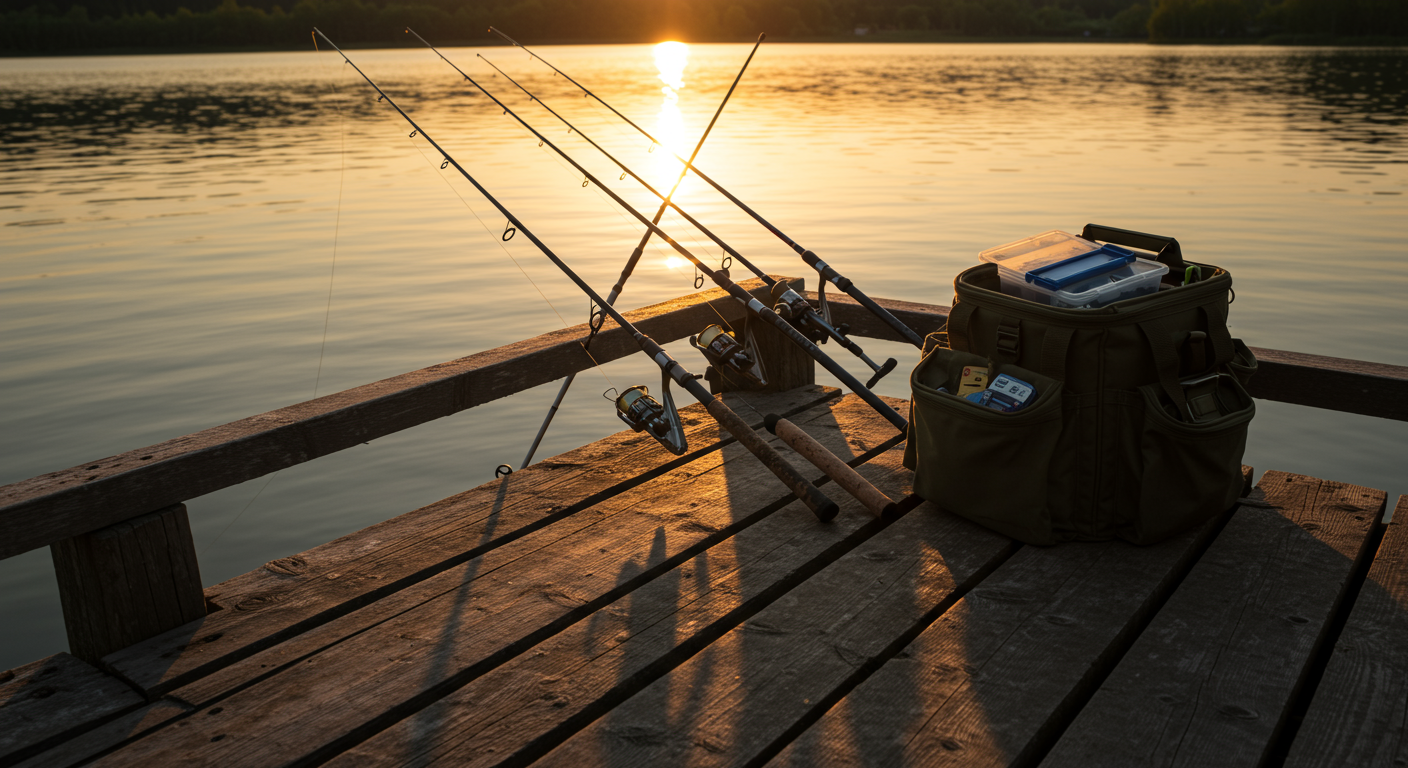
Spinning vs Baitcasting Reels: The Definitive Comparison
This is the most common question in fishing gear selection, and the answer depends entirely on what you're trying to do. Both reel types have real-world advantages, and serious anglers own and use both.
| Feature | Spinning Reel | Baitcasting Reel |
|---|---|---|
| Learning Curve | Very easy — beginner friendly | Moderate — backlash risk requires practice |
| Light Lure Performance | Excellent — handles 1/32 oz easily | Poor — difficult with lures under 3/8 oz |
| Heavy Lure / Line | Adequate | Superior — higher gear ratios, more cranking power |
| Casting Accuracy | Good | Excellent — thumb control enables precise placement |
| Line Capacity | Good for most applications | Superior for long-distance trolling |
| Sensitivity | Good | Excellent — direct line-to-thumb feedback |
| Best Applications | Light finesse, pan fish, beginners | Bass, inshore saltwater, heavy freshwater |
| Price Range | $30 – $800+ | $80 – $1,200+ |
Fishing Line: Monofilament, Fluorocarbon, and Braid Compared
Your fishing line is your only physical connection to the fish. Its properties directly affect casting distance, sensitivity, knot strength, abrasion resistance, and whether fish can see it in the water. Understanding each line type is one of the highest-return investments of knowledge in fishing.
| Property | Monofilament | Fluorocarbon | Braided Line |
|---|---|---|---|
| Visibility | Medium | Very Low — nearly invisible | High — visible in all colors |
| Stretch | High (20–30%) | Medium (15%) | Almost zero (<5%) |
| Sensitivity | Low | Medium | Excellent |
| Abrasion Resistance | Good | Excellent | Poor (on rocks/structure) |
| Water Absorption | Absorbs water, weakens over time | Does not absorb water | Does not absorb water |
| Sinks or Floats | Floats/neutral | Sinks | Floats |
| Price | Cheapest | Most expensive | Moderate to expensive |
| Best Use | Topwater, crankbaits, beginners | Leader material, clear water bottom rigs | Jigging, punching, long-distance casting |
| Knot Ease | Excellent | Good (wet before tightening) | Requires specific knots (FG, Uni-to-Uni) |
Lure Types and When to Use Each One
The artificial lure market is overwhelmingly large, but most lures fall into clearly defined categories that each serve a specific purpose. Understanding what each category does — and when it's most effective — allows you to make logical decisions rather than gambling with your selection.
Topwater Lures
Designed to be retrieved on the surface. Poppers, walk-the-dog stickbaits (like the Zara Spook), and buzzbaits create surface disturbance that triggers explosive strikes. Best during low-light conditions — early morning, evening, and overcast days. In summer, topwater around weed edges at dawn is among fishing's most exciting experiences.
Crankbaits
Hard plastic lures with a diving lip that runs the lure to a specific depth during the retrieve. Shallow divers run 2–4 feet; deep divers can reach 20+ feet. The wobbling action triggers reaction strikes from predatory fish. Excel when fish are actively feeding and covering water quickly is the priority.
Jigs
A weighted hook (round ball, football, swim, or shaky head) paired with soft plastic or hair trailers. The most versatile lure family in freshwater fishing. Effective year-round for bass, walleye, crappie, and countless other species. Requires active rod-work to impart action.
Soft Plastic Worms, Creatures, and Craws
The backbone of bass fishing. Rigged on Texas, Carolina, or drop-shot rigs, soft plastics can be crawled, hopped, or shaken to mimic worms, lizards, and crawfish. The size, color, and tail action can be varied almost infinitely to match what fish are keying on.
Swimbaits
Multi-jointed or soft-bodied lures designed to mimic baitfish with a realistic swimming action. Range from 2-inch paddle-tail grubs to 14-inch jointed hard swimbaits designed for giant largemouth and striped bass. One of the fastest-growing segments in bass fishing.
Spinners and Spinnerbaits
Blades that spin and flash on a wire arm (spinnerbait) or directly on the hook shaft (inline spinner). The vibration and flash triggers reflexive strikes from predators. Extremely fast and easy to fish — ideal for covering water quickly and locating active fish.
Terminal Tackle Essentials
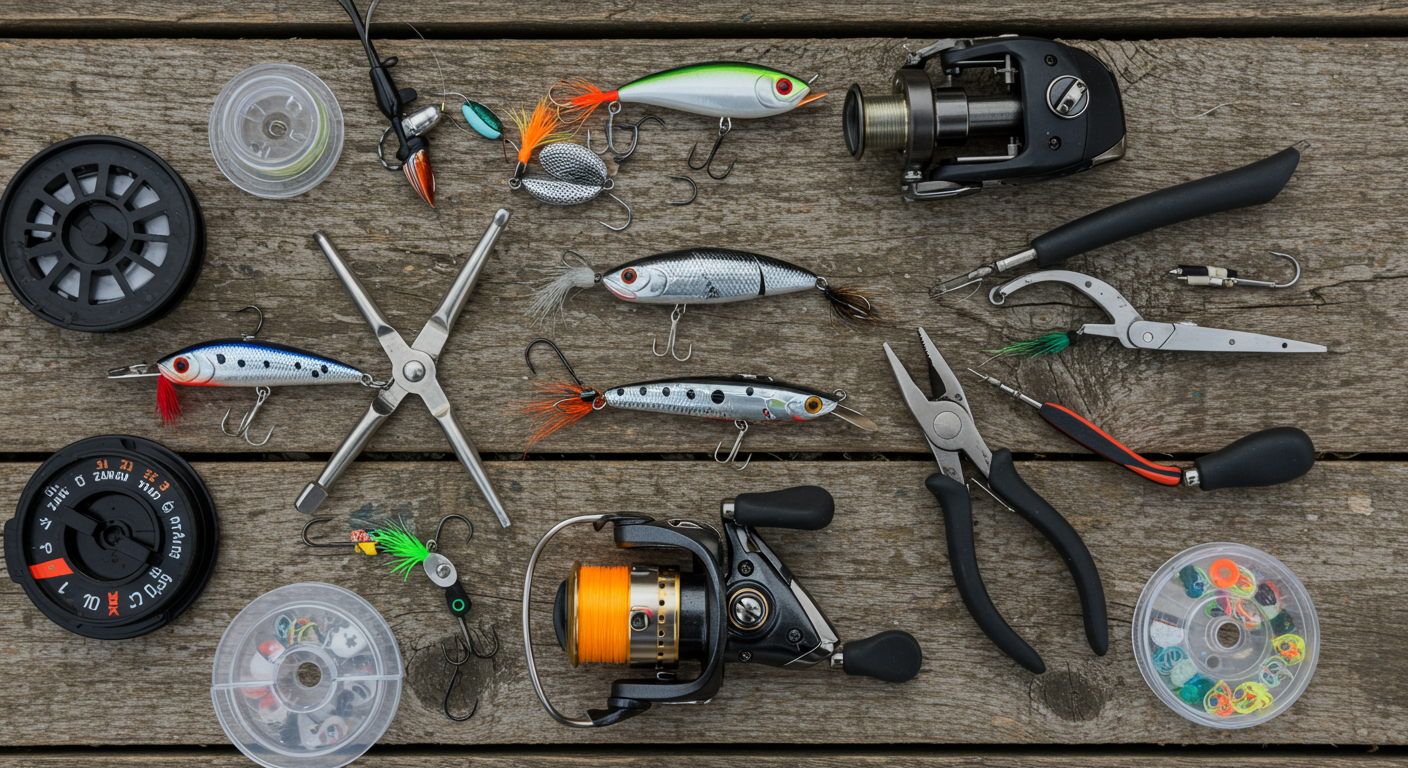
Terminal tackle refers to the components at the business end of your line — hooks, weights, swivels, snaps, and leaders. While small and inexpensive, these items are critical to your presentation's effectiveness and reliability.
- Hooks: Carry a range of sizes in multiple styles: octopus hooks for live bait, circle hooks for catch-and-release saltwater fishing, offset wide-gap hooks for soft plastics, and treble hooks for crankbait replacement.
- Sinkers/Weights: Split shots for light river fishing, bullet weights for Texas rigs, egg sinkers for Carolina rigs, bank sinkers for bottom fishing in current, and tungsten drop-shot weights for finesse fishing.
- Swivels and Snaps: Barrel swivels prevent line twist from spinning lures. Crane swivels are strongest. Coastlock snaps allow quick lure changes without re-tying. Avoid snaps with very light lures — they add weight that affects the lure's action.
- Leaders: 12–18 inch fluorocarbon leaders of appropriate strength (8–20 lb for most freshwater; 20–80 lb for saltwater) protect against fish with rough mouths, teeth, or abrasive environments.
Tackle Storage Systems
Organized tackle is accessible tackle — and accessible tackle means you spend more time fishing and less time rummaging through tangled lures and loose hooks. A well-organized tackle system also protects your investment from corrosion, UV damage, and the deformation of soft plastics stored with incompatible lures.
- Plastic tackle trays: Adjustable compartment trays fit into tackle bags and boxes. Separate hard lures from soft plastics, which react chemically with each other over time.
- Tube organizers: Keep hooks, weights, and small items sorted by size in labeled tubes or small resealable bags.
- Tackle bags vs tackle boxes: Tackle bags with removable tray pockets offer the most flexibility for day trips and travel. Hard tackle boxes are better for boat use where rain and splashing are concerns.
- Rod tubes: For travel, multi-section rod tubes protect expensive rods from airline baggage handlers. Invest in aluminum or heavy-duty PVC tubes for international trips.
Travel Fishing Gear Setups
Traveling anglers face a unique challenge: maximizing fishing performance while minimizing gear bulk and weight. The modern travel fishing setup has evolved dramatically, with multi-piece travel rods now rivaling one-piece performance.
- A 4-piece or 5-piece travel rod that packs to 20–26 inches fits in a carry-on bag or standard suitcase.
- Bring one versatile reel (size 3000 spinning with braid/fluoro combo) that handles both freshwater and lighter saltwater applications.
- Build a 50-lure "travel box" that covers topwater, crankbait, jig, and soft plastic categories for the destination's target species.
- Research local tackle availability at your destination — many foreign destinations have excellent local tackle shops where species-specific lures and rigs can be purchased on arrival.
Budget vs Premium Gear: Where to Invest
| Category | Minimum Budget | Sweet Spot | Premium Level |
|---|---|---|---|
| Spinning Rod | $40 (Ugly Stik) | $100–180 (St. Croix, G.Loomis entry) | $300+ (G.Loomis, Megabass) |
| Spinning Reel | $50 (Okuma) | $100–200 (Shimano Stradic, Daiwa Fuego) | $400+ (Shimano Stella, Daiwa Certate) |
| Baitcasting Reel | $80 (Abu Garcia) | $150–250 (Shimano Curado, Daiwa Tatula) | $400+ (Shimano Chronarch, Daiwa Steez) |
| Braided Line | $12 (Sufix 832) | $18–25 (Power Pro Maxcuatro, Daiwa J-Braid) | $35+ (Sunline Siglon, Varivas) |
| Fluorocarbon Leader | $10 (generic) | $18–25 (Seaguar, Yo-Zuri) | $35+ (Kureha, Sunline) |
Saltwater Corrosion Considerations
Saltwater is brutally corrosive to fishing gear. Reels and rods not designed for saltwater use will show corrosion within a season of regular use. Look for these features when selecting saltwater gear:
- Corrosion-resistant bearings: Shielded stainless steel or ceramic bearings resist salt intrusion
- Aluminum or anodized components: Superior to zinc or chrome-plated parts in saltwater environments
- Sealed drag systems: Prevent salt from contaminating the drag washers
- Titanium or stainless steel rod guides: Standard aluminum oxide guides corrode on the frames in saltwater
Gear Maintenance Routines
- After every trip: Rinse with fresh water, dry, check and retie terminal connections, inspect line for damage
- Monthly (heavy use): Clean and re-grease reel line roller, check drag washers, tighten all screws
- Annually: Full reel disassembly, cleaning, and re-lubrication with manufacturer-recommended grease and oil; inspect rod guides for grooves that will cut line
- Storage: Store rods horizontally or vertically (not leaning at an angle), out of direct sunlight which degrades graphite and line; store reels with drag backed off to avoid compressing drag washers
Seasonal Gear Adjustments
- Spring: Switch to lighter lines (8–12 lb fluorocarbon) for clear water post-spawn fishing; focus on crankbaits and swimbaits as fish move shallow
- Summer: Heavy braid for punching vegetation and deep jigging; heavier weights and sinkers for keeping baits deep in heat
- Fall: Topwater and fast-moving lures; upsize lure sizes to match the large schools of baitfish that bait-feeding predators are targeting
- Winter: Drop line weight significantly; fish are lethargic and lures must be presented slowly at precise depths; drop-shot and finesse jigs on 6–8 lb fluorocarbon excel
Beginner Gear Setup Checklist
- ☐ 7-foot medium power fast-action spinning rod
- ☐ Size 2500–3000 spinning reel with smooth drag
- ☐ 15 lb braided mainline + 10 lb fluorocarbon leader (6 feet)
- ☐ Assorted hooks: octopus #2, #4, #6; offset wide gap 2/0–3/0; circle hook 3/0
- ☐ Split shot sinkers and bullet weights (1/8 – 1/2 oz)
- ☐ Barrel swivels, size 10 and 12
- ☐ 5-7 lures: surface popper, shallow crankbait, jig head with paddle tail, Texas-rigged 6" worm, inline spinner
- ☐ Long-nose pliers and hook remover
- ☐ Tackle bag with 3–4 removable trays
- ☐ Polarized sunglasses (reduces glare, helps see into the water)
- ☐ Sun protection: hat, SPF clothing or sunscreen
- ☐ Small first aid kit
- ✓ Start with a quality 7-foot medium spinning combo — it handles 80% of situations
- ✓ Use braid mainline with a fluorocarbon leader for the best of both worlds
- ✓ Match rod power and action to your primary technique and target species
- ✓ Invest more in your reel than your rod — it's the most mechanically complex component
- ✓ Keep terminal tackle organized, sharp, and fresh — swap hooks if they show rust
- ✓ Rinse saltwater gear after every trip without exception
- ✓ A disciplined maintenance routine adds years to the life of quality gear
Frequently Asked Questions
Related Articles & Guides
Fishing Tackle for Every Species
GearFishing Line Selection: Mono, Fluoro, and Braid
GearBaitcasting Reels: Complete Buyer's Guide
GearSpinning vs Baitcasting Reels: Which to Choose
GearEssential Fishing Rods: How to Choose the Right One
GearBudget Fishing Gear for Beginners
GearCare Tips for Fishing Tackle
GearSurfcasting Gear Guide: Beach and Pier Fishing Setup
GearSmart Fishing Gear: Tech That Actually Helps
GuideBeginner Fishing Master Guide
GuideComplete Fishing Techniques Guide